C3S and MSA Components: A Collaboration That Began with a CubeSat Connector
“The first connector came from MSA.” With these words, Gyula Horváth, CEO of Hungarian space company C3S, recalls the beginnings of the company’s collaboration with MSA Components. In our interview recorded at Space Tech Expo Europe 2025, he explains why reliable connectors mattered for a CubeSat with redundant subsystems and describes how C3S has since progressed from small satellite systems towards more demanding space projects.
The First Connectors: Reliability from the Beginning
For Horváth, MSA Components has been part of C3S’s development story from its early days. He recalls that the first reliable connectors for an early CubeSat with redundant subsystems came from MSA. This gives the collaboration a concrete engineering context: even a redundant system architecture depends on reliable electrical contacts to maintain the intended signal and power paths.
Engineering considerations include electrical performance, contact reliability, mechanical retention, vibration exposure and the routing of redundant paths. C3S, for example, describes redundant CAN communication and a backplane using Nano-D and Micro-D connectors for its 6U platform. That specification identifies the interface types; it does not identify the supplier of each connector.
How C3S Is Expanding Beyond Its CubeSat Roots
From its early CubeSat work, C3S has developed a broader portfolio. It now designs satellite platforms from 3U to 16U, alongside subsystems such as onboard computers and electrical power systems (EPS). Larger platforms bring additional requirements for power supply, protected distribution and fault management.
The C3S EPS range illustrates the scale of these requirements. The manufacturer lists maximum outputs of 70 W, 90 W and 100 W for EPS 1000, 1200 and 1300, respectively. EPS 2000, developed for larger SmallSats, is specified for up to 2 kW, with as many as 20 maximum power point tracking (MPPT) channels, 200 load-current-limiter (LCL) distribution channels and 2 kWh of battery capacity. These are EPS product characteristics, not a description of the equipment selected for a specific SAILOR spacecraft.
C3S announced another step in October 2026: according to the company, it was selected as prime contractor for FLOTTA under ESA’s ARTES programme. The project aims to develop a 50–150 kg microsatellite platform together with a production approach for larger constellations. FLOTTA is a separate development project, not evidence that serial manufacture of that platform has already started.
SAILOR: A New Step in Measuring Space Debris
With SAILOR (Sail Array for Impact Logging in Orbit), C3S is acting as prime contractor on an ESA initiative to measure small space-debris particles. Impacts that are difficult to observe using ground-based systems would instead be registered directly in orbit on instrumented detector surfaces, providing additional data for space-debris environment models.
C3S’s current mission concept comprises four spacecraft of approximately 100 kg each. Each spacecraft is planned to deploy two 25 m² sail surfaces. Acoustic PVDF sensors would register impacts, while cameras would locate and characterise the resulting holes. HPS GmbH is involved as subcontractor for the deployable membrane subsystem. ESA describes SAILOR and its precursor demonstrator OPTIMIST as technologies being prepared for future measurements of particularly small debris.
C3S currently identifies 2030 as the target launch year for SAILOR. The mission remains in planning and development. Horváth’s reference to spacecraft of up to around 200 kg likewise describes a development ambition. This progression puts his account of the early CubeSat projects into context: the cooperation with MSA began with a specific need for reliable interconnects, while C3S now addresses more complex spacecraft and mission architectures.
Meet C3S and Our Team at Space Tech Expo Europe 2026
C3S will exhibit independently at Space Tech Expo Europe in Bremen from 17 to 19 November 2026. Visit the C3S team at Booth C38 to discuss satellite platforms, EPS architectures and SAILOR.
Our extended team, with colleagues from MSA Components and Hi-Rel Solutions by Steliau Technology, will also be available in Hall 5, Booth F11 for technical discussions on high-reliability electronics and your space-project requirements.
Arrange a technical discussion with our team in Bremen:
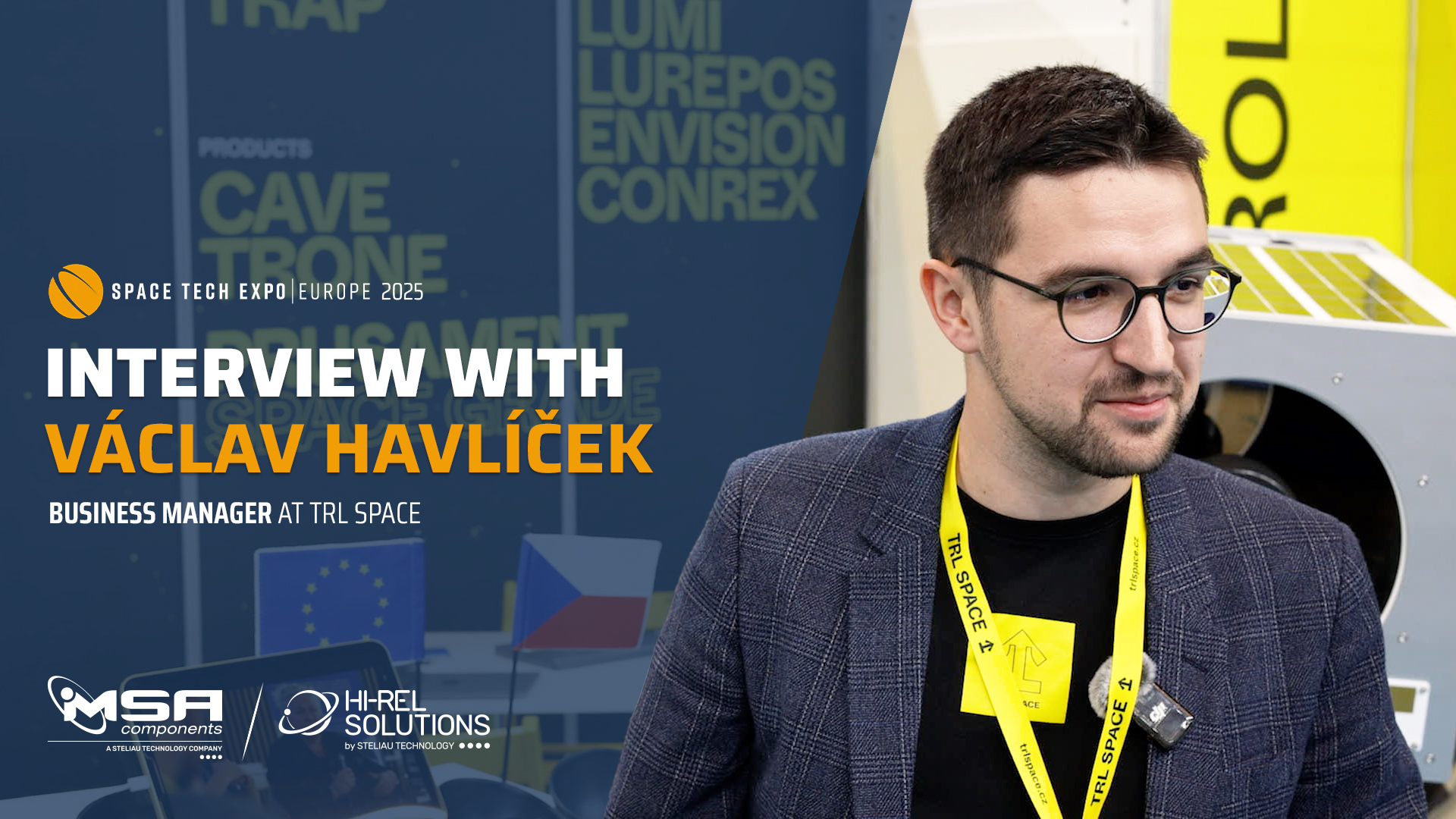
TRL Space: From Earth-Observation Satellites to the EnVision Venus Mission TRL Space develops satellite missions and the hardware needed to build and deploy them. In our interview recorded at Space…
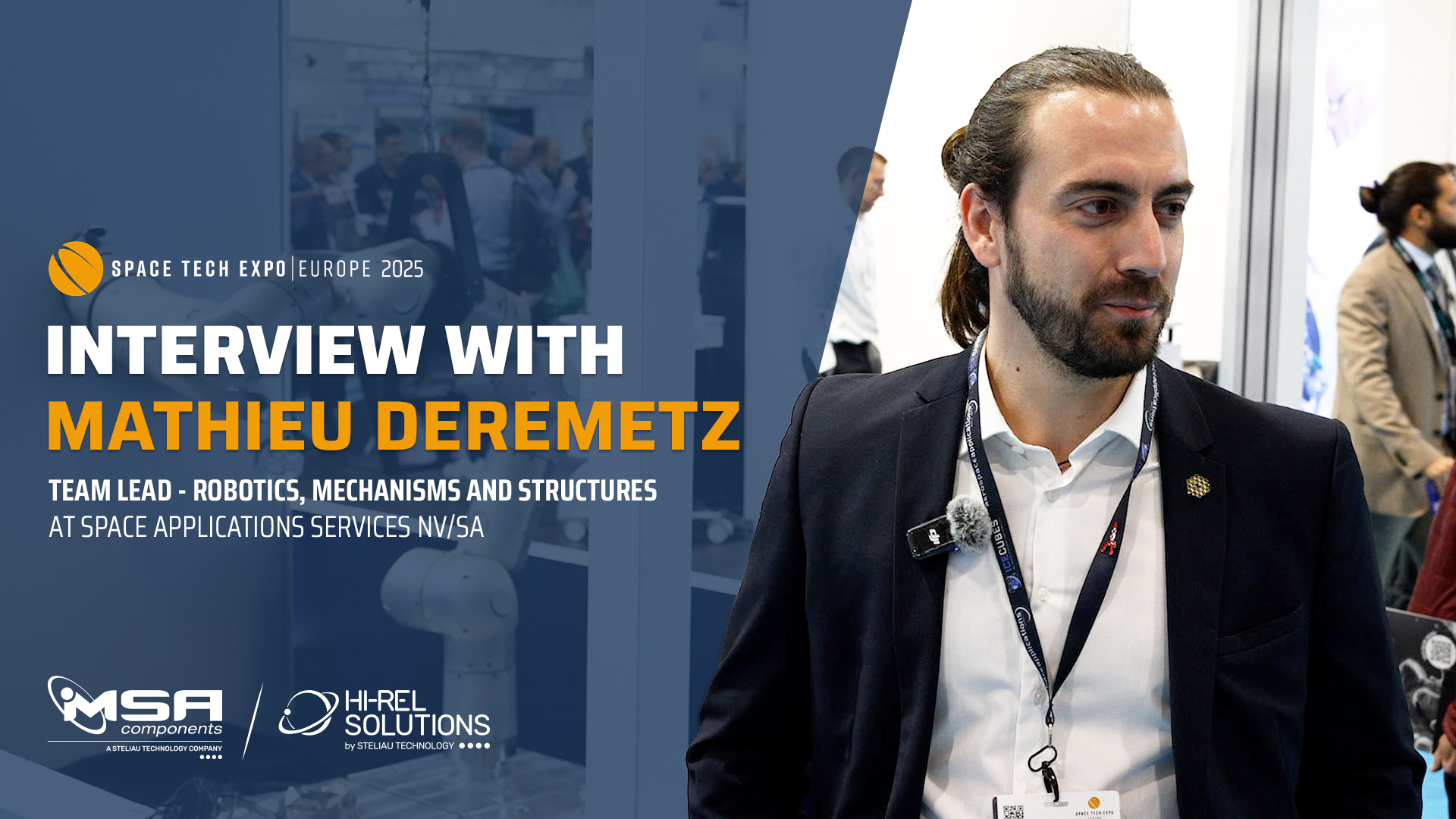
Space Applications Services: Robotic Interfaces for Working in Orbit Servicing or reconfiguring spacecraft in orbit takes more than a robotic arm. Tools and modules must also be docked, released and…
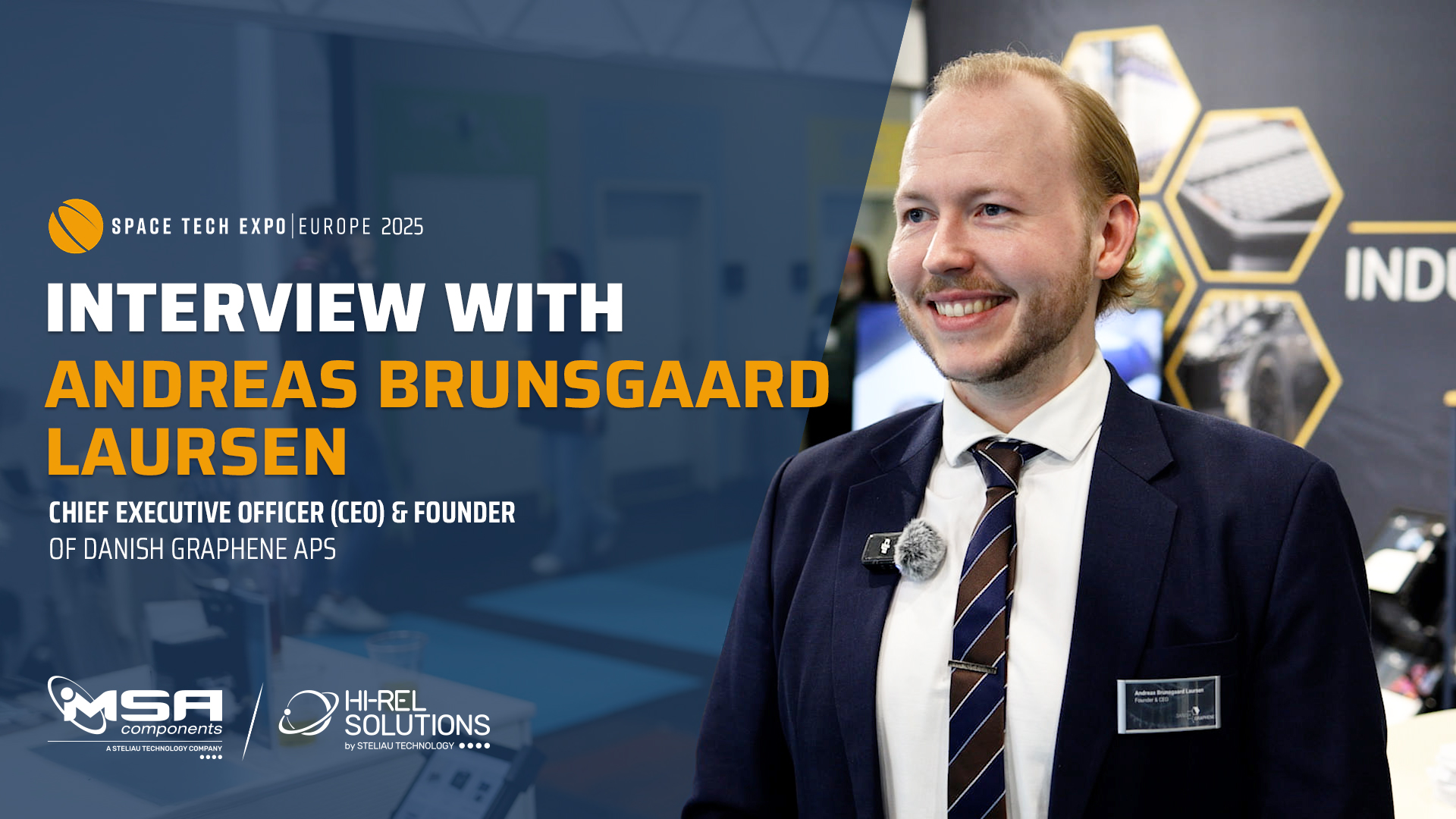
Danish Graphene: Graphene-Enhanced Thermal Adhesives for Satellite Electronics Satellite electronics rely on effective heat transfer across component interfaces. Material conductivity matters, but so does the quality of the thermal contact…
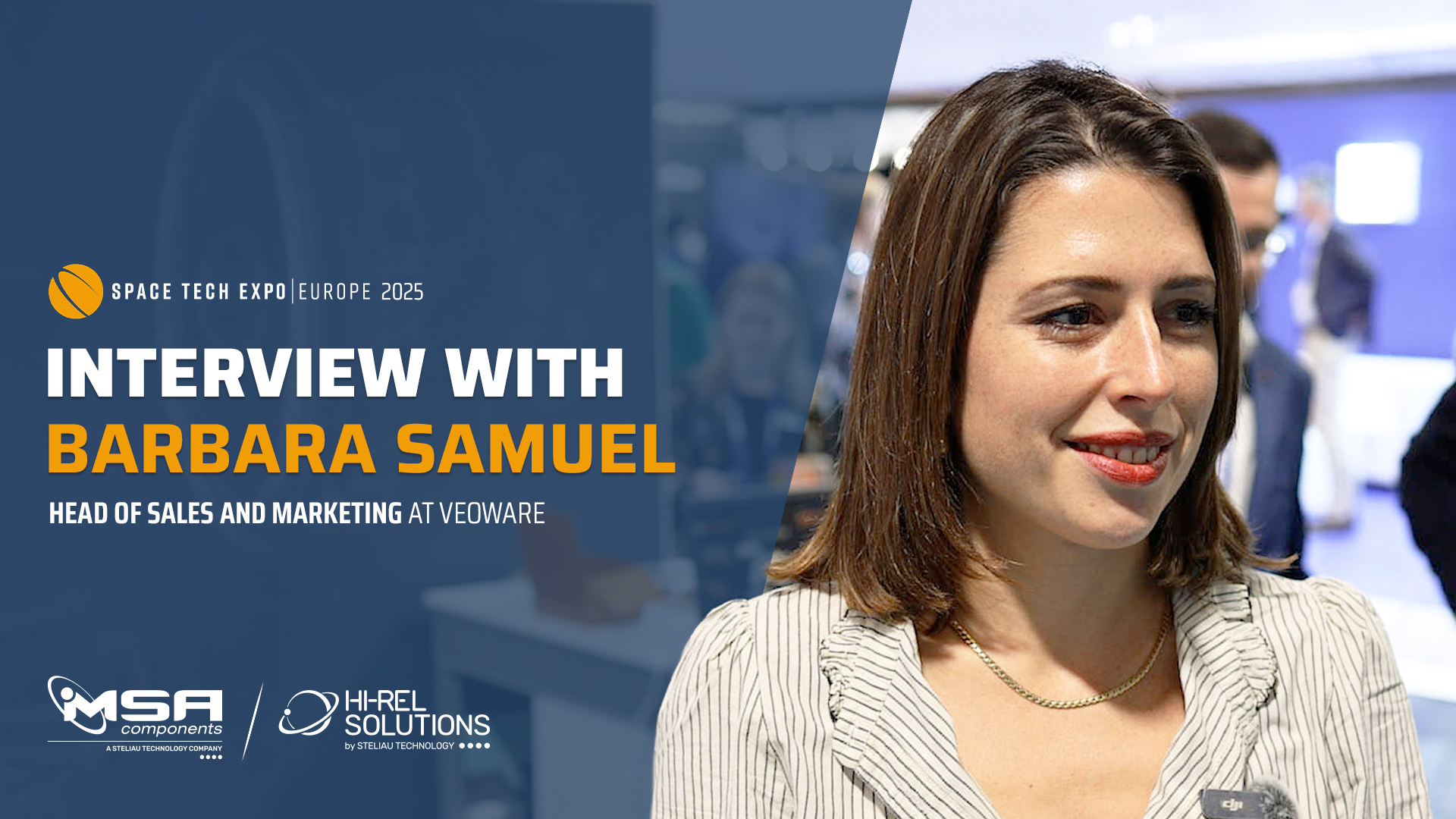
Veoware: Control Moment Gyroscopes for Agile Satellite Manoeuvres Acquiring more targets during a single orbital pass requires a spacecraft to reorient quickly between observations. In our interview recorded at Space…
From component selection to design-in: our sales team advises you in person, by phone, video call or on site. We will set aside 30 minutes for you.
How
Phone, video call or on site
Where
At MSA in Attendorn or at your premises
Duration
Up to 30 minutes
Response
Within 1–2 working days
PERSÖNLICHE BERATUNG
Sprechen wir über Ihr Projekt
Von der Bauteilauswahl bis zum Design-in: Unser Vertriebsteam berät Sie persönlich, telefonisch, per Videokonferenz oder vor Ort. Wir nehmen uns 30 Minuten Zeit.
Wie
Telefon, Video oder vor Ort
Wo
Bei MSA in Attendorn oder bei Ihnen
Dauer
Bis zu 30 Minuten
Rückmeldung
Innerhalb von 1-2 Werktagen
Application Form
Bewerbungsformular
Produktinformationen anfordern
Interessieren Sie sich für dieses Produkt? Geben Sie unten Ihre Daten ein, und wir melden uns bei Ihnen mit Informationen zu Preisen, Verfügbarkeit und technischen Details.
Request Product Information
Interested in this product? Fill in your details below and we'll get back to you with pricing, availability, and technical information.